A lab test at home in Abu Dhabi means a trained healthcare professional visits you to collect samples, usually blood or urine, which are then sent to a laboratory for analysis. You avoid a trip to a clinic and a wait in reception. Preparation depends on the test: fast only if your doctor or the lab tells you to, and keep taking your usual medicines unless advised otherwise.
How does home sample collection work?
The process is simpler than most people expect. It usually follows the same basic order:
- You book the test. Have the doctor’s request form ready if you have one, or the exact names of the tests you need.
- You confirm preparation. This is the moment to ask whether fasting or any other preparation is needed for your specific tests.
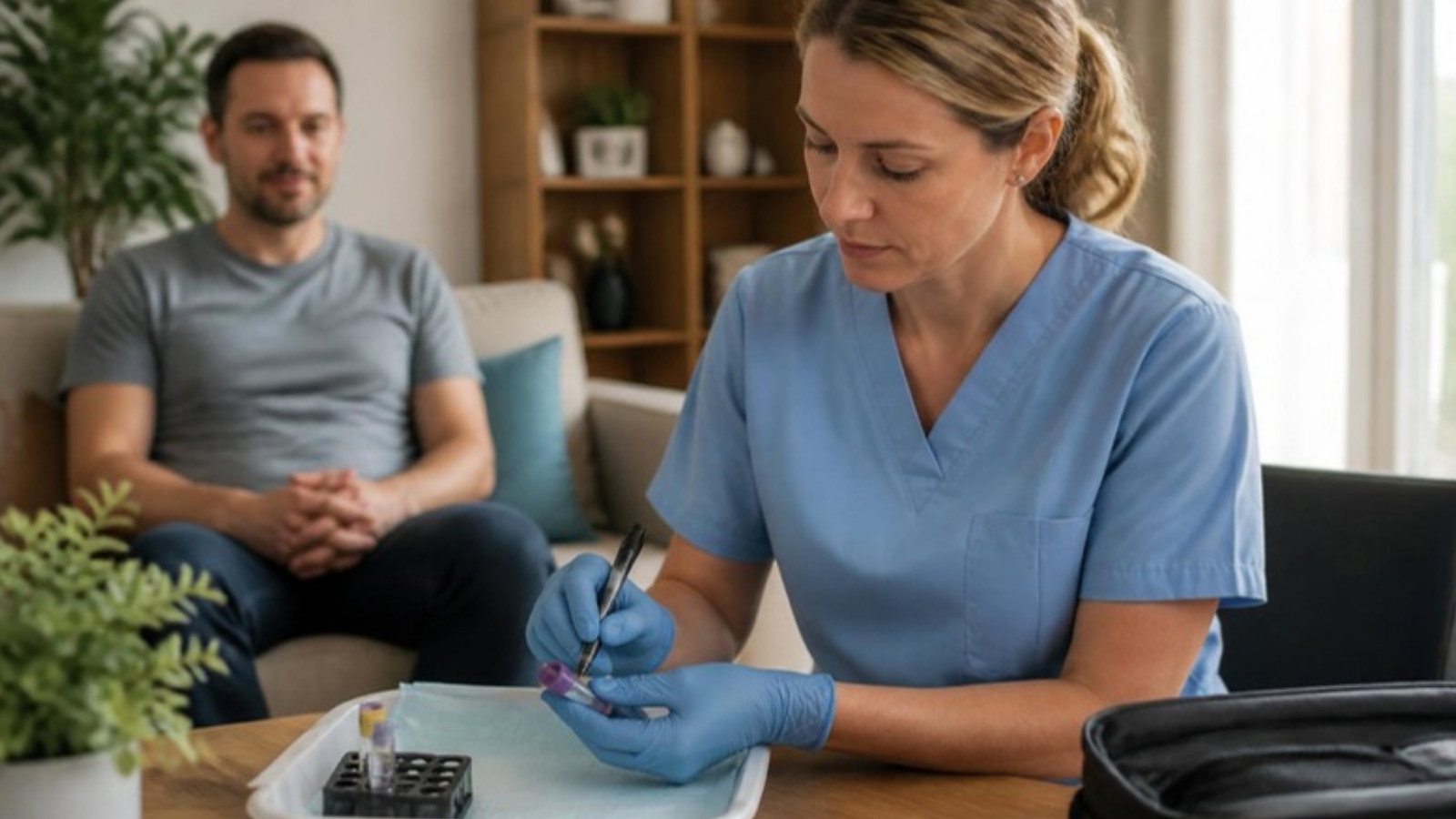
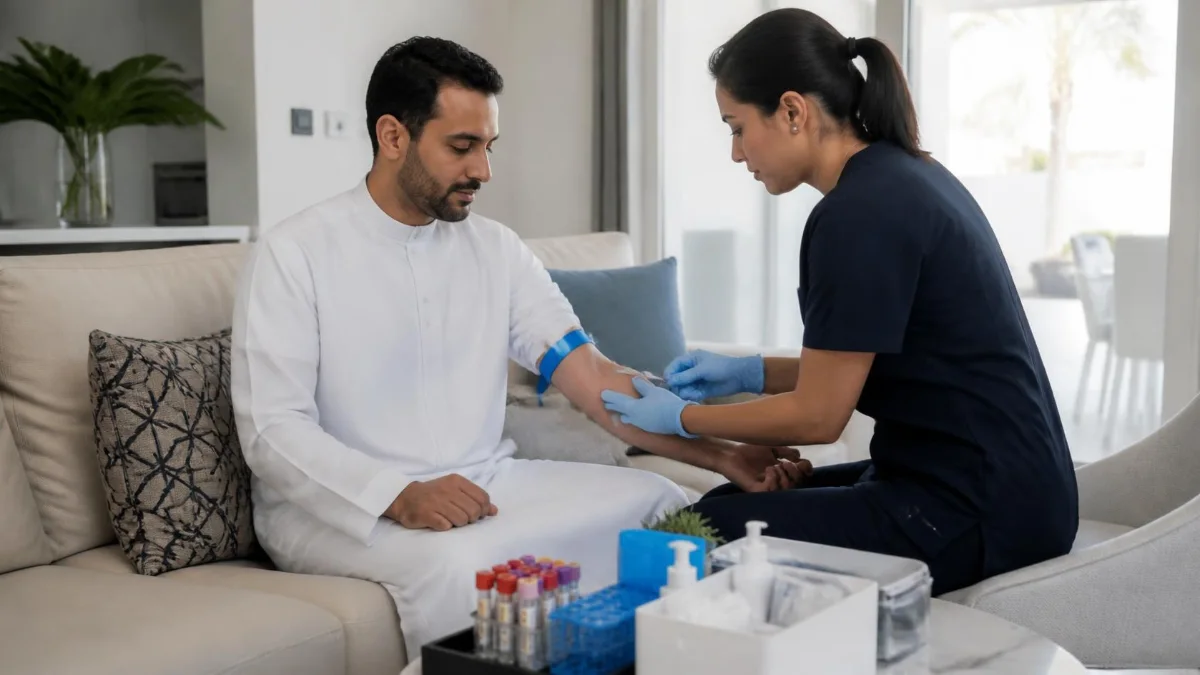
- A healthcare professional visits. They should check your identity, confirm the tests and collect the samples using sealed, single-use equipment.
- Samples are labelled and transported. Correct labelling and handling matter just as much as the collection itself.
- The laboratory analyses them and the results are shared with you so you can review them with your doctor.
For a standard blood draw, the visit itself is short. Most of the time goes on checking details and labelling, which is exactly how it should be.
Fasting: only when your doctor says so
This is where people make the most mistakes. Some tests need fasting and many do not. People often fast for every blood test out of habit, then feel faint, especially on a hot day or when they are older.
The rule is simple. Ask whoever requested the test, or ask when booking, whether fasting is needed and for how long. If it is, plain water is usually allowed, but confirm that too. If it is not, eat normally.
Medicines are another common worry. Do not stop or delay a regular medicine to have a test unless your doctor has specifically told you to. People with diabetes should be especially careful with fasting and should speak to their doctor beforehand.
During Ramadan, timing needs a little more thought. If you are fasting for religious reasons and need a blood test, discuss the best time of day with your doctor and mention it when booking.
Small things that make the visit go smoothly
- Drink water beforehand if you are allowed to. Well-hydrated veins are usually easier to find.
- Wear a short-sleeved top or something with loose sleeves.
- Have your Emirates ID and any doctor’s request form nearby.
- Choose a well-lit spot to sit, ideally a chair with an armrest at a table.
- Mention if you have fainted during blood tests before, so you can lie down for the draw.
- Tell the professional if you take blood thinners, since you may need to press on the site a little longer.
For urine samples, you will normally be given a container and instructions. Follow them exactly, because a poorly collected sample can mean repeating the test.
Who benefits most from having tests at home
Older adults and people with limited mobility
For an elderly parent in a villa in Al Mushrif, a clinic visit means getting dressed, a car journey, parking and waiting. Having the sample taken at home removes all of that, and it is often the difference between a test being done on time and being put off.
People recovering after illness or surgery
Doctors sometimes want repeat blood tests during recovery. If walking is still difficult, home collection keeps those checks on schedule without exhausting the patient.
Busy families and working professionals
Taking half a day off work in the city for a ten-minute blood test makes little sense. An early appointment at home before work, whether in a flat on Al Reem Island or a townhouse in Khalifa City, fits around the day instead.
Anyone anxious about clinics
Some adults and children find clinics stressful. Being in familiar surroundings can make the experience calmer.
Questions worth asking when you book
A two-minute conversation at booking prevents a lot of avoidable problems. Before you confirm, ask:
- Which preparation, if any, is needed for each of my tests?
- Can all the tests be taken in one visit, or do any need a different time of day?
- How and when will the results reach me, and in what format?
- Can the results be shared with my doctor directly if I want that?
- What happens if a sample cannot be taken or has to be repeated?
If you are booking for someone else, such as a parent who lives in another part of the city, give the address details clearly, including the building name, flat number or villa number and any gate or security instructions. In large compounds and newer communities, a missing villa number is an easy way for a visit to start late.
What home testing cannot do
A lab test gives results. It does not give a diagnosis on its own. Numbers outside a reference range can have many explanations, and some results that look normal still need context. Always go through results with a doctor, especially before changing medicines, diet or supplements.
Home sample collection is also not suitable for emergencies. If someone has chest pain, severe breathlessness, signs of a stroke or another urgent symptom, call emergency services rather than booking a test.
Booking a lab test at home with Infinity Home Care
Infinity Home Care arranges lab tests at home across Abu Dhabi. If you want a broader look at your health rather than a single test, a medical check-up at home may suit you better. Families caring for an older relative often combine testing with elderly care so that health checks fit into the existing routine.
To book, contact our team with the tests you need and any doctor’s request. We will confirm what preparation is required and arrange a convenient time for the visit.
Frequently asked questions
Do I need to fast before a lab test at home?
Only if your doctor or the laboratory tells you to. Many tests do not require fasting at all. Ask when you book, and confirm whether water is allowed if fasting is needed.
Do I need a doctor’s referral for a lab test at home in Abu Dhabi?
It depends on the test and the provider. Having a doctor’s request is helpful because it makes clear exactly which tests are needed and who will review the results. Ask about this when you book.
Should I take my usual medicines before the test?
Generally, yes, unless your doctor has told you otherwise for a specific test. Do not stop or delay medicines on your own. If you have diabetes and need to fast, speak to your doctor first.
Can children have lab tests at home?
Home sample collection can make the experience calmer for some children because they are in a familiar place. Mention the child’s age when booking so the visit can be planned appropriately, and follow your paediatrician’s advice on which tests are needed.
How will I understand my results?
Review them with your doctor, who can interpret them alongside your symptoms, history and medicines. A result outside the reference range is not a diagnosis by itself. Avoid making treatment decisions based on results alone.
Medical note: This article is general health information, not a diagnosis or a substitute for advice from your own doctor. Healthcare services in Abu Dhabi are regulated by the Department of Health – Abu Dhabi (DoH).