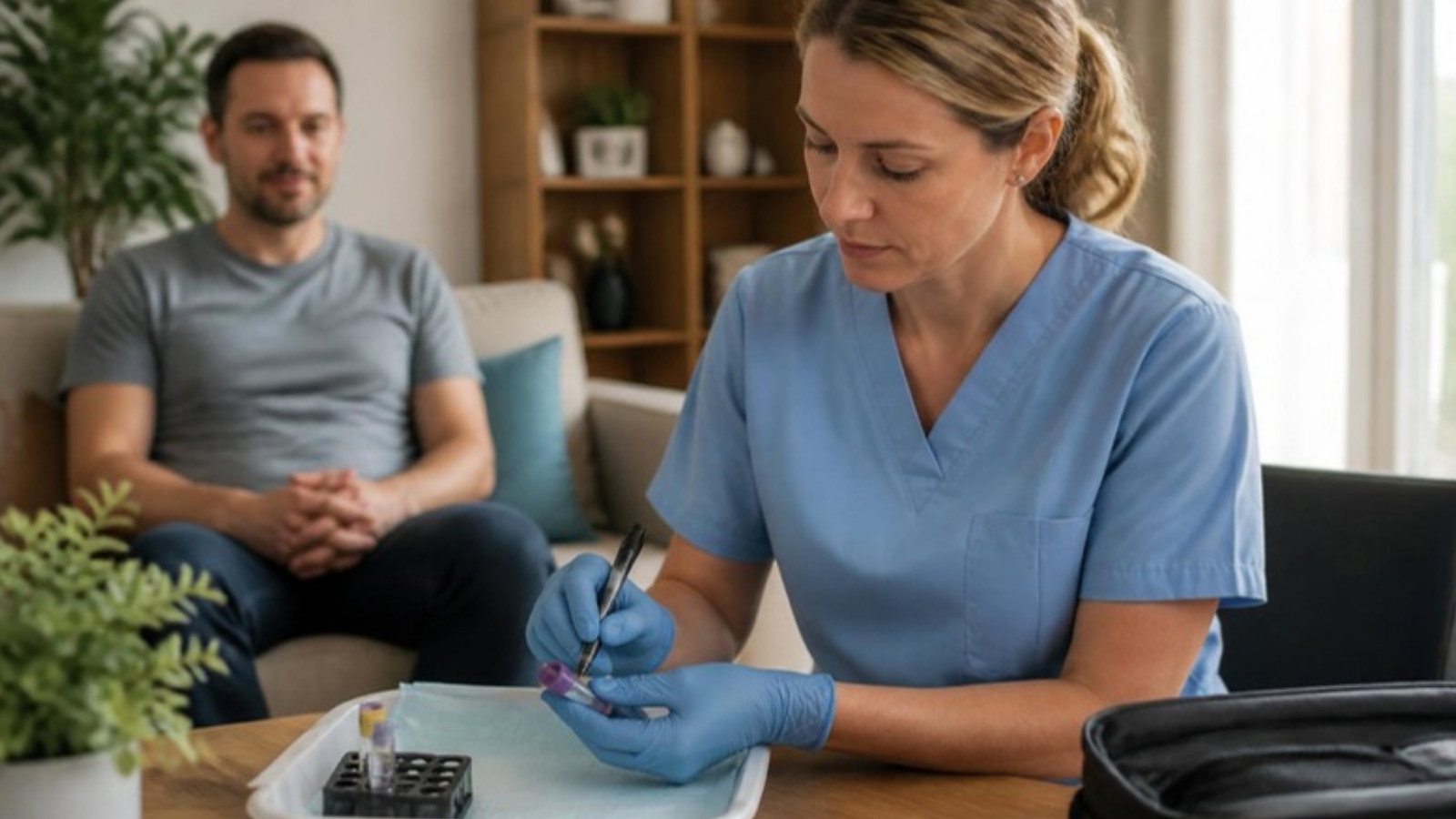
Physiotherapy at home in Abu Dhabi after a knee or hip replacement brings a physiotherapist to your home to guide exercises, walking and everyday movements within the plan your surgeon has set. It spares you difficult trips to a clinic in the early weeks and lets the therapist adapt advice to the rooms you actually live in. How well recovery goes still depends on the surgery, your general health and the exercises you do between visits.
Why the first weeks back home carry so much weight
The operation is only half of a joint replacement. The other half happens over the following weeks, mostly in your own living room, and it depends on regular, guided movement. Hospital stays after knee and hip surgery are often fairly short, so much of the early rehabilitation starts once you are home.
That is exactly when getting to a clinic is hardest. Climbing into a car with a new hip, crossing a hot car park in Khalifa City in September, sitting in a waiting room on a low chair: none of it helps. Having sessions at home removes the journey and lets the therapist see the real space you move around in, which turns out to matter more than people expect.
What a home physiotherapy session usually involves
Every surgeon, operation and patient is different, so treat this as a general picture rather than a set programme. A typical visit follows a pattern along these lines:
- A short check on pain, sleep, swelling and anything that has changed since the last visit.
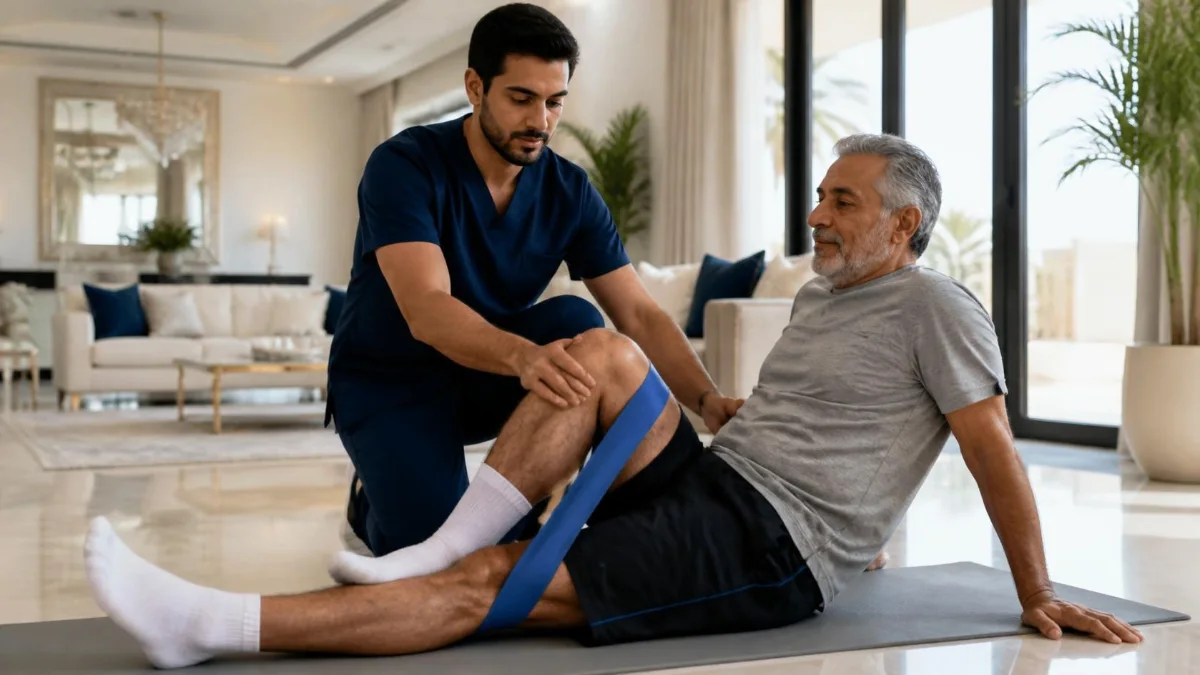
- Exercises to rebuild range of movement, such as bending and straightening the knee, within the limits your surgeon has given.
- Gentle strengthening for the muscles around the joint, progressed as you cope.
- Practice with daily tasks: getting out of bed, standing from a chair, using the toilet, managing a step.
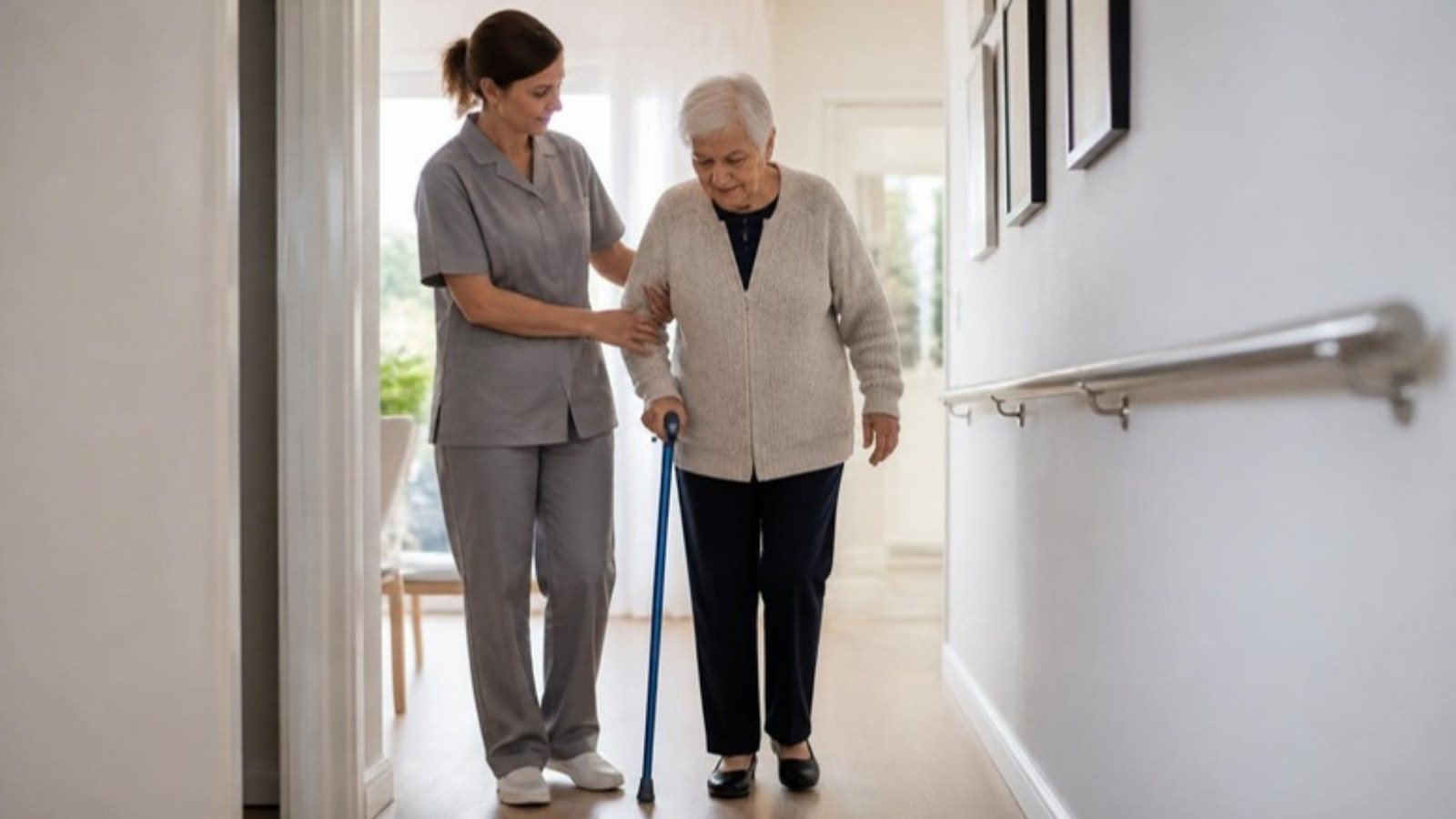
- Walking with the aid you were given, plus advice on when to discuss changing it with your surgeon’s team.
The physiotherapist will also leave you with exercises for the days in between. This is the part people skip. A visit every day or two cannot do the job alone; the repetitions you do by yourself are what move things forward.
Some ache during and after exercise is common. Sharp or worsening pain, a hot or red joint, new swelling or pain in the calf, fever, breathlessness or a wound that looks wrong are different. Stop and contact your surgeon or doctor straight away, and in an emergency call for urgent medical help.
Working from your surgeon’s instructions, not around them
Your surgeon will usually set rules about how much weight you can put through the leg, which movements to avoid and how quickly to progress. Hip replacements in particular often come with position precautions for a period, and these vary with the surgical approach. A home physiotherapist should work inside those instructions, never around them.
Before the first visit, have these ready:
- Your discharge summary and any written exercise sheet from the hospital.
- The date of your follow-up appointment with the surgeon.
- A list of current medicines, including pain relief, so sessions can be timed sensibly.
- Walking aids, braces or other equipment you were sent home with.
If something in the home programme seems to clash with what the surgeon said, ask. A careful therapist will check rather than guess, and the surgical team has the final word on restrictions.
Preparing a flat or villa for the first few weeks
Most homes in Abu Dhabi were not designed with a new hip in mind. A few changes before discharge make sessions safer and daily life easier.
Clear the routes you walk every day
Loose rugs, trailing phone chargers and low coffee tables cause most of the trouble. Make a clear path from the bed to the bathroom and to wherever you sit during the day. In a flat on Al Reem Island that might mean moving one side table. In a large villa in Mohammed Bin Zayed City it can mean deciding to live downstairs for a while.
Decide early about stairs
Plenty of villas have every bedroom upstairs. Ask your surgeon or physiotherapist whether you should tackle stairs from day one or set up a temporary bedroom on the ground floor. Stair practice is often part of home sessions, but only once you are ready for it.
Chairs, beds and the bathroom
Deep sofas and low majlis seating are hard to rise from after joint surgery. A firm chair with arms is usually easier, and bed height matters too. In the bathroom, a non-slip mat and something solid to hold onto are worth more than any gadget. Sitting on floor cushions may need to wait until your surgeon is happy for you to bend that far.
Keep the air conditioning comfortable during sessions. Exercising in a warm room tires people quickly, and it is easy to get dehydrated in the UAE even indoors.
How family can help without taking over
Relatives and domestic helpers often want to do everything for the patient. That comes from a good place, but it can slow recovery. The aim is for the person to do as much as they safely can on their own.
One useful habit is to have a family member sit in on the first session or two. They learn how to assist safely with standing and walking, see the exercises done properly and can give gentle reminders later. They also tend to be the first to notice if something changes.
Keep a simple notebook or phone note with the exercises done, pain levels and questions for the next visit or the surgeon. It takes two minutes a day and makes every session more productive.
Mistakes we see in home recovery
- Doing far too much on a good day, then losing two days to pain and swelling.
- Skipping exercises because the therapist is coming tomorrow anyway.
- Changing or stopping pain relief without asking the doctor, then being too sore to move.
- Sitting for hours in the evening without getting up.
- Ending sessions early because walking feels fine, before strength and balance have properly returned.
Arranging sessions with Infinity Home Care
Infinity Home Care offers physiotherapy services in your home across Abu Dhabi, as well as home nursing for patients who need nursing support during recovery. If the patient is an older relative, our elderly care team can help with daily routines while they get back on their feet.
To get started, contact our team and share the discharge information and your surgeon’s instructions. We can then talk through how often visits may be useful and plan them around your recovery. No one can promise how fast an individual will recover, since that depends on many factors, but we can help make sure the work is done safely and consistently at home.
Frequently asked questions
When can physiotherapy at home start after a knee or hip replacement?
It usually starts soon after you are discharged, but the timing is set by your surgeon. Some hospitals begin exercises before you leave, and home sessions continue from there. Always follow the start date and precautions in your discharge instructions.
How many home physiotherapy sessions will I need?
There is no single number that suits everyone. It depends on the type of surgery, your fitness before the operation, any other health conditions and how you progress. Your physiotherapist and surgeon will review this as you go.
Is home physiotherapy as effective as going to a clinic?
For many people in the early weeks, guided exercise at home works well because it focuses on the movements they need in their own space. Later on, some patients benefit from equipment found in a clinic or gym. Your physiotherapist can advise when that might help.
What should I do if my pain gets worse between sessions?
Contact your surgeon or doctor, especially if the pain is sharp, the joint is hot or red, the calf is swollen or you feel unwell. Do not simply push through it. Let your physiotherapist know too so they can adjust the next session.
Can a family member be present during sessions?
Yes, and it often helps. A relative or helper can learn how to assist safely and remind the patient to do their exercises between visits. Just make sure the patient still does as much as they safely can themselves.