
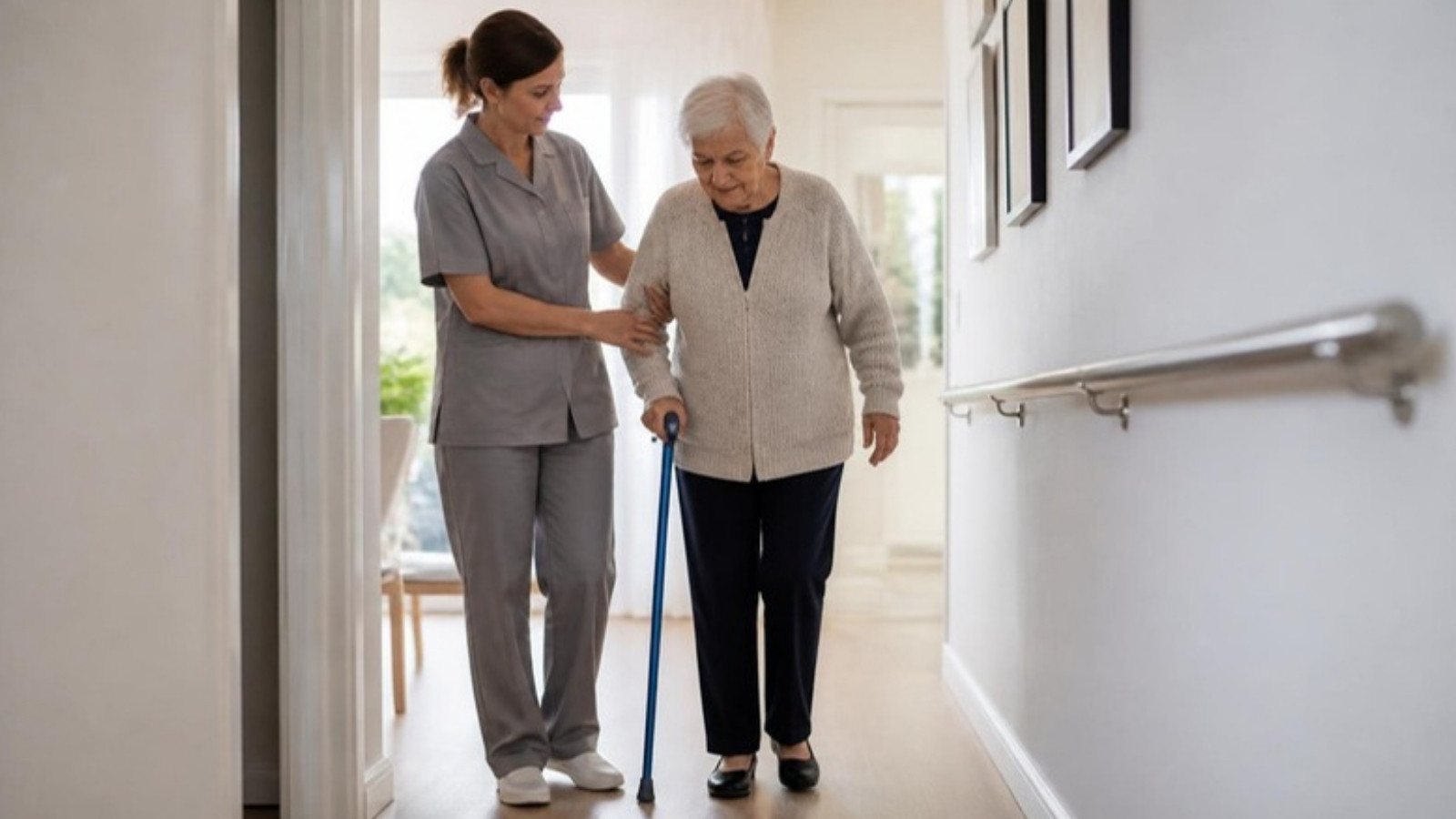
A single fall can change an older person's life. Even without a broken bone, it can bring pain, fear of falling again and a loss of confidence that keeps them from moving around. The good news is that many falls can be prevented. Elderly fall prevention starts with understanding why falls happen, then making simple changes at home and in daily routines. This guide gives families a clear checklist and explains how professional caregivers can help.
How common are falls in older adults?
Falls are very common in later life. The WHO global report on falls prevention in older age estimates that around 28 to 35 percent of people aged 65 and over fall each year, rising to 32 to 42 percent for those over 70. The report describes fall-related injuries as a major cause of pain, disability and loss of independence.
Why do older adults fall?
Older adults usually fall because several risks combine, such as weaker muscles, medicines that cause dizziness, poor eyesight and hazards at home. Common risk factors include:
- Weaker muscles and poorer balance
- Medicines that cause dizziness or drowsiness, especially when several are taken together
- Poor eyesight or old glasses
- Low blood pressure when standing up quickly
- Conditions such as stroke, Parkinson's disease, arthritis or dementia
- Dehydration, which is a real risk in the UAE's hot months
- Rushing to the bathroom at night
- Hazards at home such as rugs, cables, slippery floors and poor lighting
Room by room elderly fall prevention checklist
Most falls happen at home, during everyday activities such as walking to the bathroom, getting out of bed or reaching for something in the kitchen. Good elderly fall prevention therefore starts with the rooms your parent uses most. Walk through the home with this checklist and fix the easy things first.
Bathroom
- Fit grab bars next to the toilet and in the shower
- Use non-slip mats inside and outside the shower
- Consider a shower chair and a raised toilet seat
- Wipe up water immediately
Bedroom
- Keep a lamp or night light within reach of the bed
- Light the path from the bed to the bathroom
- Make sure the bed is at a height where feet rest flat on the floor
- Keep the phone, glasses and water on the bedside table
Living areas and stairs
- Remove loose rugs, or secure them with non-slip backing
- Keep cables and clutter out of walkways
- Arrange furniture so there is a clear path through each room
- Fit handrails on both sides of the stairs and keep stairs well lit
Kitchen
- Store everyday items between waist and shoulder height
- Avoid step stools; ask for help to reach high shelves
Daily habits for elderly fall prevention
- Stay active. Regular, gentle exercise that builds strength and balance is one of the most effective ways to prevent falls.
- Review medicines. Ask the doctor to check all medicines at least once a year, especially if dizziness is a problem.
- Check eyes and feet. Update glasses and wear well-fitting shoes with non-slip soles, not loose slippers.
- Drink enough water throughout the day, particularly in summer.
- Stand up slowly, sitting on the edge of the bed for a moment before getting up.
What should you do after a fall?
If an older person falls, stay calm and check for injuries before moving them. If they are in severe pain, cannot move a limb, hit their head or seem confused, call emergency services and do not try to lift them.
If they are not hurt, help them roll onto their side, get onto hands and knees and slowly rise using a sturdy chair. Always tell the doctor about any fall, even if there was no injury, because it can signal a health problem that needs attention.
How can professional caregivers help?
For many families, especially when everyone works, a trained caregiver is the most reliable way to keep a parent safe at home. Infinity Home Care's elderly care service in Abu Dhabi includes continuous monitoring to prevent falls and injuries, mobility and mobilisation support, help with bathing, dressing and toileting, medication management and support for medical appointments. Caregivers are trained and background-verified, and Infinity uses tools such as remote monitoring and fall detection to add another layer of safety.
Where strength and balance need work, physiotherapy at home can help older adults regain confidence and independence.
Frequently asked questions
Can falls in older adults be prevented?
Many can. Combining regular strength and balance exercise, a medicine review, eye checks and a safer home greatly reduces the risk of falls in older adults.
What is the most dangerous room for falls?
The bathroom is a common place for falls because of wet floors and the need to sit and stand. Grab bars and non-slip mats make a big difference.
Is a caregiver needed for every older person?
Not always. A caregiver is most helpful for seniors who have already fallen, live with a chronic condition, have memory problems or are recovering from illness or surgery.
Is Infinity Home Care licensed?
Yes. Infinity Home Care is licensed by the Department of Health Abu Dhabi to provide home health care services, and all caregivers are trained and background-verified.
Key takeaways
- Roughly a third of people over 65 fall each year, but many falls are preventable.
- Start with the bathroom, bedroom lighting and clear walkways.
- Exercise, a medicine review, good shoes and enough water lower the risk.
- A trained caregiver adds daily supervision and support for families.
Want extra support to keep a loved one safe at home? Speak to Infinity Home Care on +971 56 411 8515, by call or WhatsApp, or send a request online.